Over the past week, our team made significant progress on both the fabrication and technical integration of our installation.
Fabrication Work
What work have we done?
We’ve now finalized the height, base, and structural balance of our design. Earlier, we experimented with different placement approaches by trying out several arrangements to see how the form could best capture the essence of a desert rose. We ended up with a bunch of failed attempts. After a few trials, we settled on a placement that feels both grounded and visually fluid.
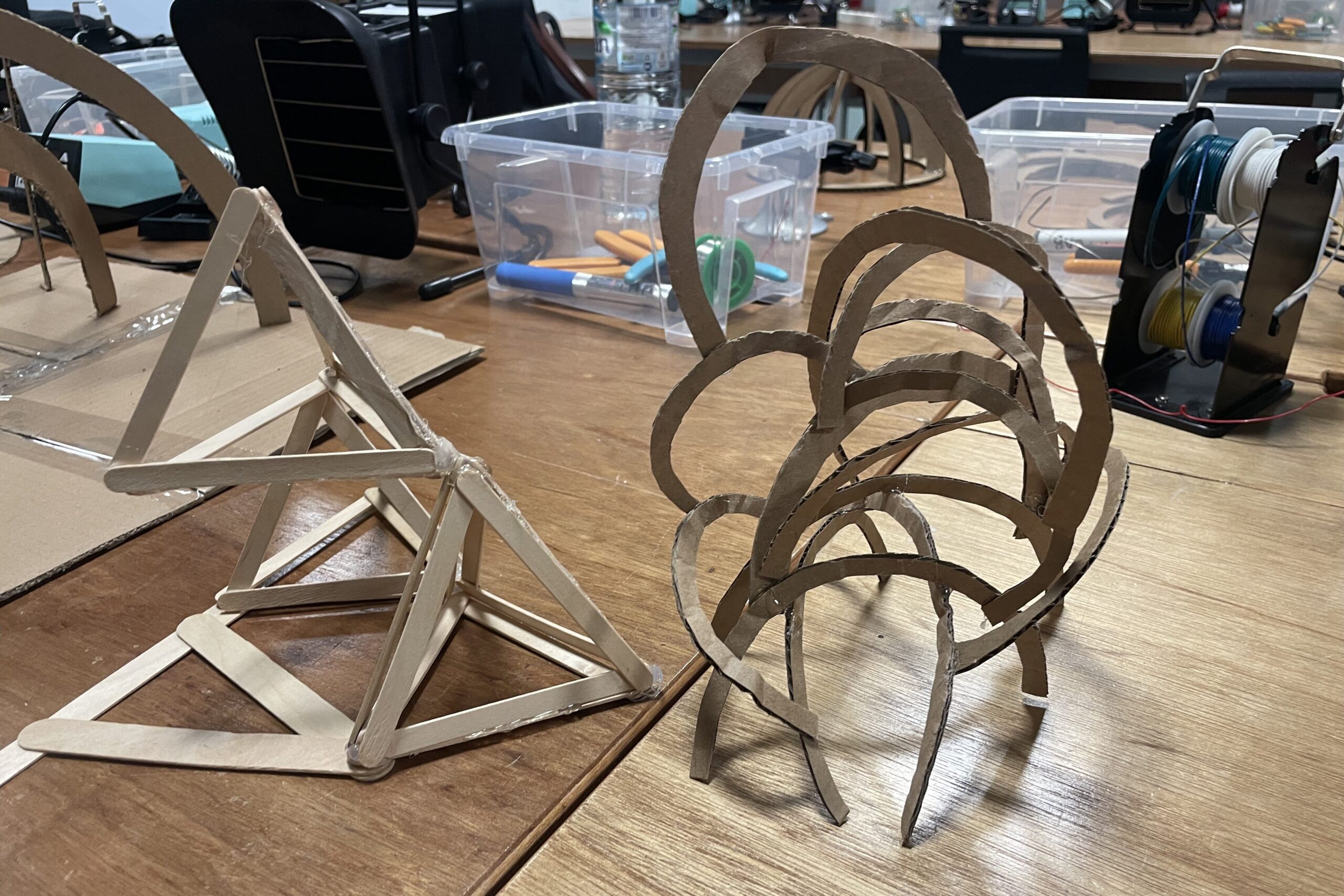
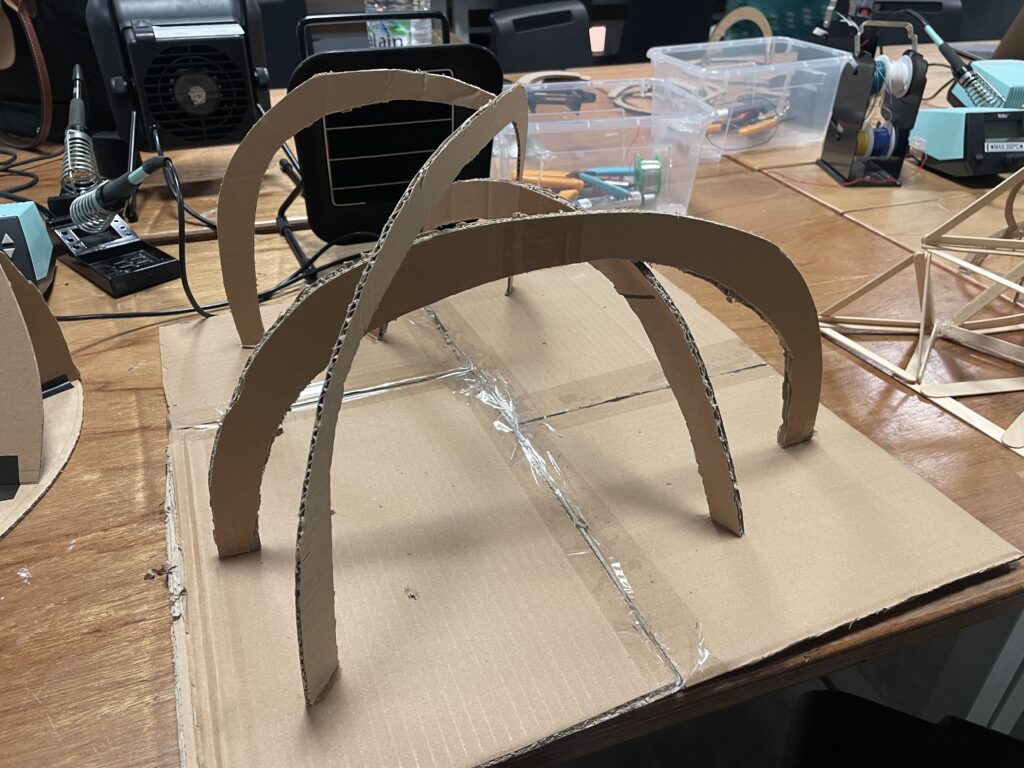
Initially, we tried creating cardboard prototypes with arches serving as petals for our desert rose by just cutting them out and sticking them, but soon realized that that would take hours, and it would not be as stable. We were inspired by the head of one of the robots for performing robots to create this hemisphere structure and stacking them upon each other. We figured that would give us a more balanced, central structure that would work better. So we laser-cut the cardboard to build this prototype and, in the process, we realized that just stacking them unevenly gave the exact aesthetic we were going for. Once we had enough hemispheres to create the full height we were going for, we started noting what adjustments we would need to make for our final project. For example, we realized that if we were to have a thicker rim for the base, but decrease the thickness of the rim as the hemispheres decrease in diameter, it would look more visually appealing. It would also be more stable.
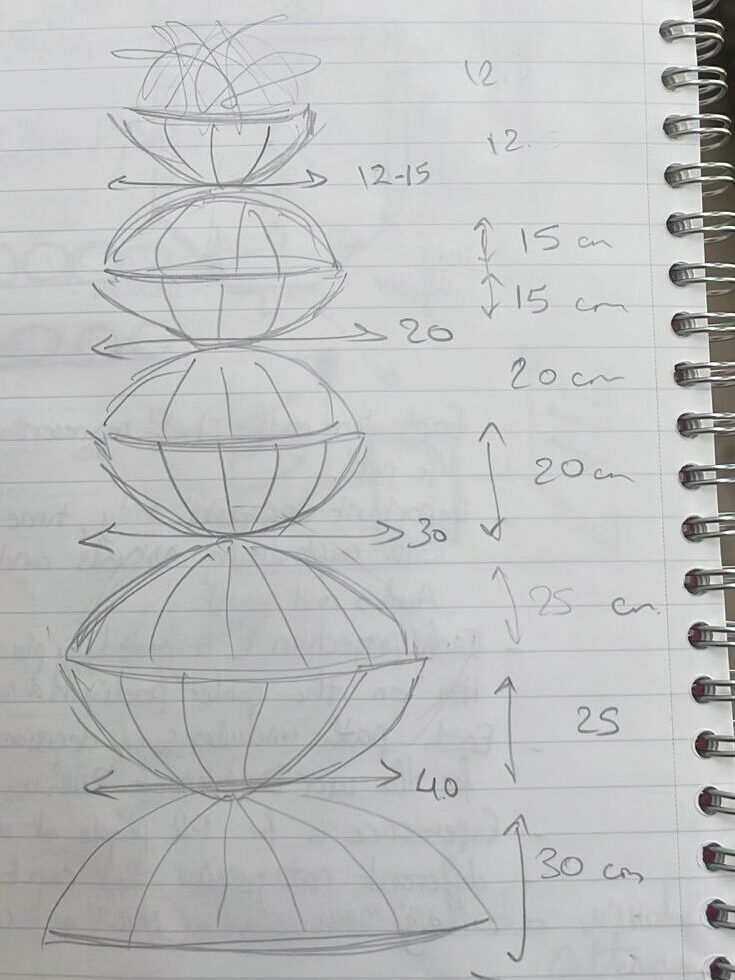
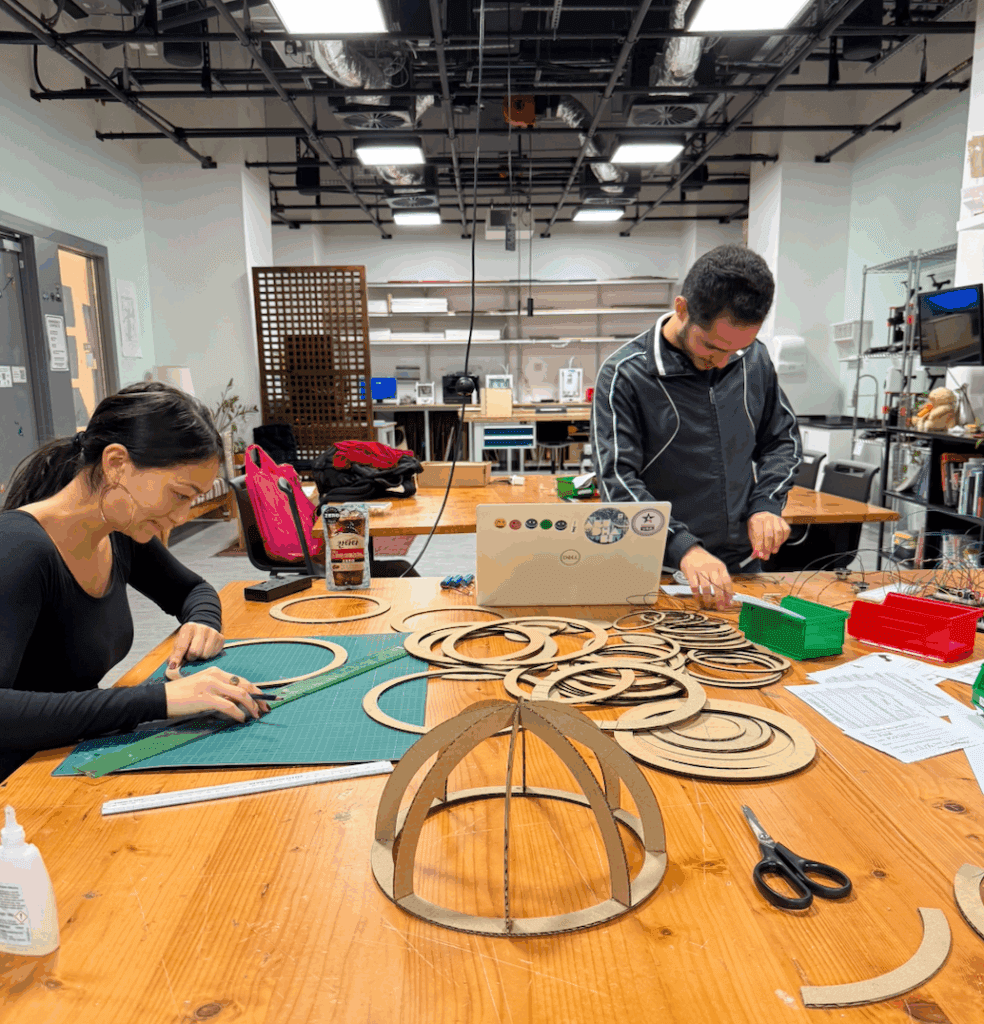
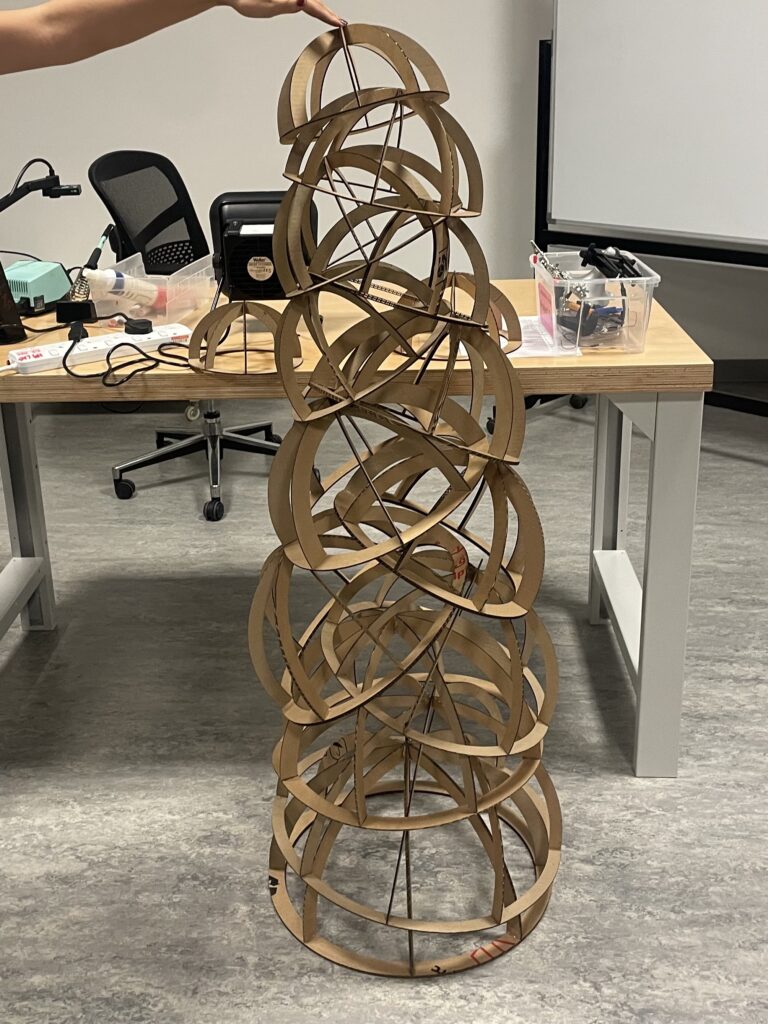
We are currently brainstorming how we want to place the neopixels, where we would place the boards and the wires, whether we want to add extra petals sticking out to give them a more asymmetric and uneven look, etc.
Technical Progress
What technical problems are still in progress?
On the technical side, everything is working as expected so far. The three desert rose boards are now fully connected and communicating with their individual speakers and Neopixels, as well as with each other and functioning consistently with the sensors.
At this stage, we are not facing any major technical challenges. The next steps include programming the Neopixels to follow our intended light sequences and refining the interaction behaviors to ensure the overall experience feels smooth and immersive.
Also, if you want to check on the current code progress, you can check the GitHub repository in the following link: Project Repository
With the structure taking shape and the system responding well, we’re looking forward to integrating the built form with the technical components and begin transitioning from prototype to final implementation over the next few days.